About Malta
Three Islands. Seven Thousand Years. One Perfect Holiday.
The Essentials
What is Malta?
Malta is a small archipelago of three inhabited islands — Malta, Gozo and Comino — positioned in the heart of the Mediterranean, 93 kilometres south of Sicily and just three hours by air from London.
Despite its compact size — the main island is just 27km long — Malta packs more history, culture, and natural beauty per square kilometre than almost anywhere else in Europe. It has been continuously inhabited for over 7,000 years, leaving behind one of the world's most extraordinary concentrations of ancient, medieval, and baroque heritage.
For UK travellers, Malta offers a uniquely frictionless Mediterranean experience. English is an official language and is spoken fluently across all three islands. The island drives on the left. Plugs are UK three-pin. The legal system is rooted in British common law. The currency is the Euro.
The result is a destination that feels simultaneously familiar and profoundly exotic — a Mediterranean island that has absorbed Phoenician, Roman, Arab, Norman, Spanish, French and British influences, and distilled them into something entirely its own.
7,000 Years in Brief
The History of Malta
Malta Travel Guide | VisitMalta.co.uk
Neolithic farmers from Sicily arrive in Malta, beginning one of the Mediterranean's longest unbroken stories of human habitation.
The Temple Builders
An extraordinary civilisation constructs the Megalithic Temples — among the oldest free-standing structures in the world, predating Stonehenge and the Egyptian pyramids. The Ħaġar Qim, Mnajdra and Ġgantija temples are UNESCO World Heritage Sites.
Phoenicians and Carthaginians
Phoenician traders establish Malta as a key Mediterranean staging post. The Maltese language traces much of its Semitic roots to this period.
Roman Malta
Rome takes control after the Second Punic War. Malta — known as Melite — becomes a prosperous municipium. According to Acts of the Apostles, St Paul is shipwrecked on Malta in AD 60, beginning the island's deep Christian tradition.
Arab Rule
Arab forces take Malta, introducing new agricultural techniques, irrigation systems, and words that form the core of modern Maltese — the only Semitic language written in the Latin alphabet.
The Knights of St John
Holy Roman Emperor Charles V grants Malta to the Knights Hospitaller. Their 268-year rule transforms the islands, culminating in the founding of Valletta — named after Grand Master Jean Parisot de Valette, hero of the Great Siege of 1565.
British Malta
Britain takes control following Napoleon's brief occupation. Malta becomes a pivotal naval base and is awarded the George Cross in 1942 for collective bravery during the wartime Siege of Malta.
Independence
Malta gains independence on 21 September 1964, becoming a republic in 1974. It joins the European Union in 2004 and adopts the Euro in 2008.
The Archipelago
Malta, Gozo and Comino
The Main Island
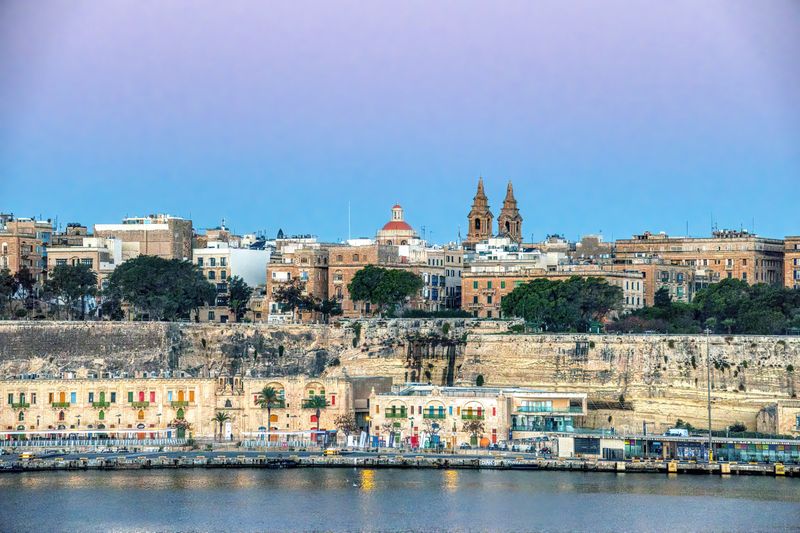
Malta
Home to the capital Valletta, the silent city of Mdina, the fishing village of Marsaxlokk, and the resort areas of Sliema, St Julian's and Mellieħa.
Explore Valletta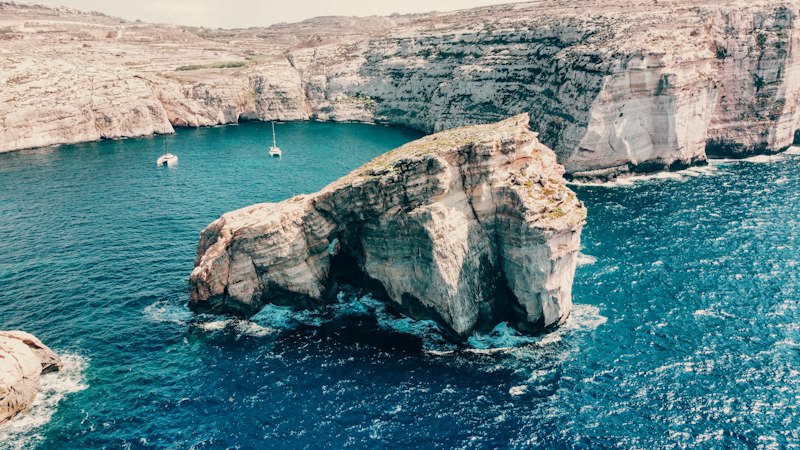
The Sister Island
Gozo
Slower, greener, and wilder than the main island. Famous for its dramatic coastline, ancient Ġgantija Temples, salt pans, dive sites, and the distinctive Citadel.
Explore Gozo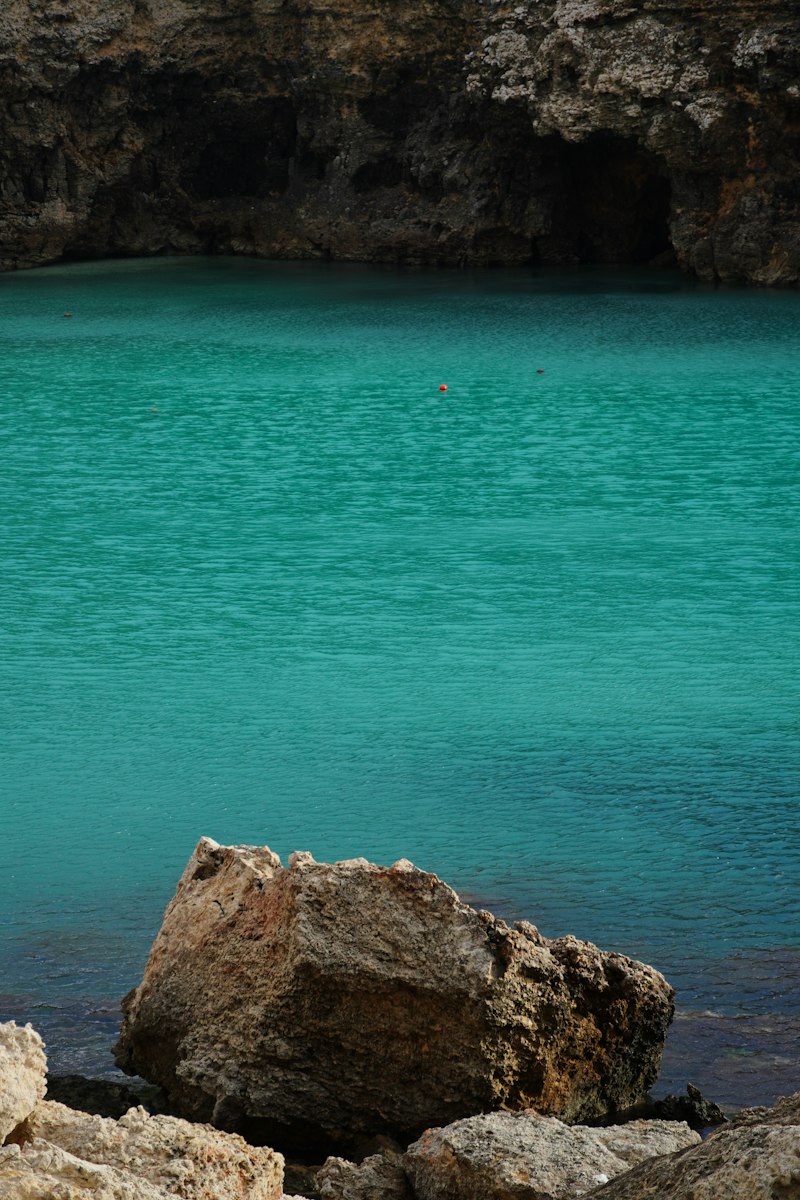
The Blue Lagoon Island
Comino
A tiny uninhabited island between Malta and Gozo, famous for the Blue Lagoon — turquoise waters of extraordinary clarity. Best visited early morning.
Blue Lagoon GuideFor UK Travellers
Essential Malta Facts
Language
English is an official language alongside Maltese. You will have no communication difficulties anywhere on the islands.
Getting There
Direct flights from London Heathrow and Gatwick with KM Malta Airlines. Flight time approximately 3 hours 10 minutes.
Time Zone
Malta is CET (UTC+1) in winter and CEST (UTC+2) in summer — one hour ahead of the UK.
Visa
No visa required for UK passport holders. Stay up to 90 days in any 180-day period. Valid passport required.
Climate
300+ days of sunshine annually. Summer (Jun-Sep) 28-35°C. Spring/Autumn 18-25°C. Mild winters rarely below 12°C.
Getting Around
Buses connect all major towns. Taxis and rideshare widely available. Driving is on the left — same as the UK.
UNESCO Sites
Valletta, the Megalithic Temples (Ħaġar Qim, Mnajdra, Ġgantija, Skorba, Tarxien), and the Hal Saflieni Hypogeum.
Population
Around 550,000 people across the three islands. Warm, welcoming, and accustomed to British visitors.
Religion
Roman Catholic is the official state religion. Malta has more churches per square kilometre than anywhere in the world.
Common Questions
About Malta — FAQs
Where is Malta?
Malta is a small island nation in the central Mediterranean Sea, located 93km south of Sicily and 288km north of Africa. It consists of three inhabited islands: Malta, Gozo and Comino.
How long is the flight from London to Malta?
Direct flights from London Heathrow and London Gatwick to Malta International Airport take approximately 3 hours 10 minutes with KM Malta Airlines.
What language do they speak in Malta?
Malta has two official languages: Maltese and English. English is widely spoken throughout the islands, making Malta one of the most accessible Mediterranean destinations for UK visitors.
What is the best time to visit Malta?
Malta enjoys over 300 days of sunshine annually. The best times to visit are May-June and September-October when temperatures are warm (22-28°C), the sea is inviting, and crowds are more manageable than peak summer.
Do I need a visa to visit Malta from the UK?
UK citizens do not need a visa to visit Malta. You can stay for up to 90 days in any 180-day period. A valid UK passport is required.
What currency does Malta use?
Malta uses the Euro. Credit and debit cards are widely accepted throughout the islands.
Ready to Experience Malta?
Direct flights from London with KM Malta Airlines. ATOL-protected holidays. Book with confidence.